
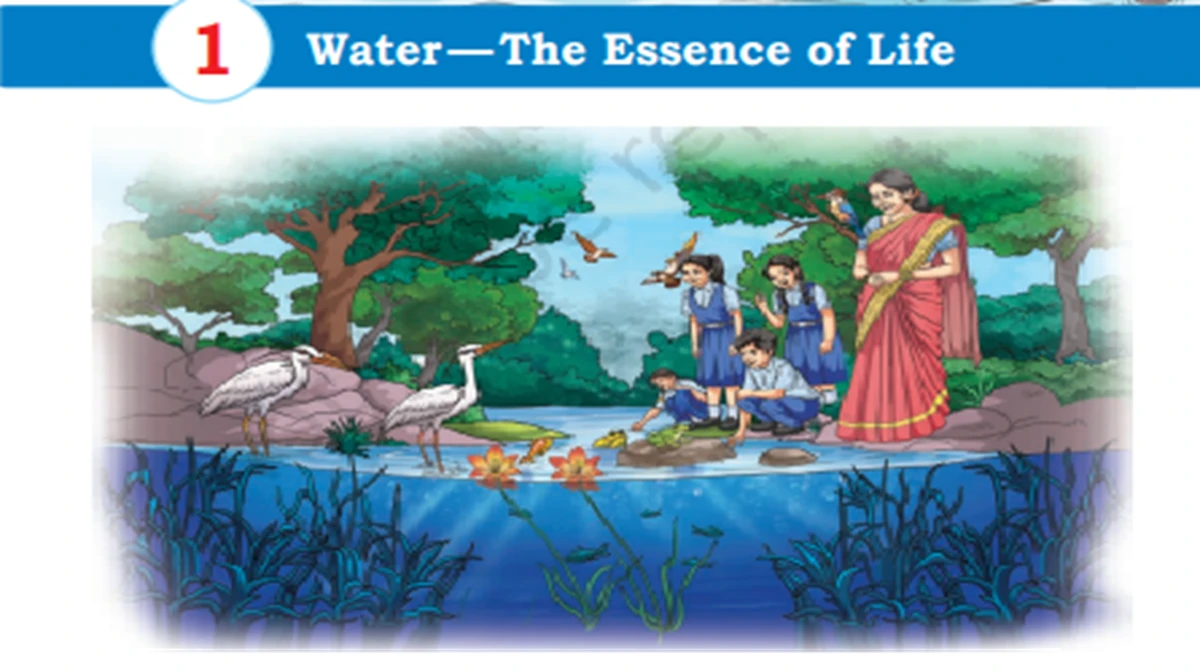
1. Key Notes for Quick Revision (Water – The Essence of Life Based on NCERT Chapter Class 5 Science)
1.1. Introduction to Revision Notes
1.1. पुनरीक्षण नोट्स का परिचय
This section provides a comprehensive, point-wise summary of all critical facts, definitions, and data from the chapter “Water — The Essence of Life.”
यह खंड “जल – जीवन का सार” अध्याय से सभी महत्वपूर्ण तथ्यों, परिभाषाओं और डेटा का एक व्यापक, बिंदु-वार सारांश प्रदान करता है।
These notes have been meticulously compiled to facilitate rapid revision, helping you recall essential information efficiently before an examination.
इन नोट्स को त्वरित पुनरीक्षण की सुविधा के लिए सावधानीपूर्वक संकलित किया गया है, जो आपको परीक्षा से पहले आवश्यक जानकारी को कुशलतापूर्वक याद करने में मदद करता है।
Pay special attention to geographical locations, specific biological adaptations, and scientific definitions, as these are frequently targeted areas in competitive exams.
भौगोलिक स्थानों, विशिष्ट जैविक अनुकूलन और वैज्ञानिक परिभाषाओं पर विशेष ध्यान दें, क्योंकि ये अक्सर प्रतियोगी परीक्षाओं में लक्षित क्षेत्र होते हैं।
The following summary covers the fundamental concepts of water, its properties, and its role in sustaining life.
निम्नलिखित सारांश पानी की मौलिक अवधारणाओं, इसके गुणों और जीवन को बनाए रखने में इसकी भूमिका को शामिल करता है।
1.2. Consolidated Factual Summary
1.2. समेकित तथ्यात्मक सारांश
Fundamental Concepts of Water
जल की मौलिक अवधारणाएँ
- While most of the Earth’s surface is covered with water, the majority of it is salty, making freshwater a very limited resource.
यद्यपि पृथ्वी की अधिकांश सतह पानी से ढकी हुई है, इसका अधिकांश भाग खारा है, जिससे मीठा जल एक बहुत ही सीमित संसाधन बन जाता है। - To visualize the scarcity, if all the water on Earth were in a glass, the usable freshwater would only be equivalent to the amount in a teaspoon.
कमी की कल्पना करने के लिए, यदि पृथ्वी पर सारा पानी एक गिलास में होता, तो प्रयोग करने योग्य मीठा जल केवल एक चम्मच की मात्रा के बराबर होता। - All living beings, including people, animals, birds, and plants, depend on freshwater to survive.
मनुष्यों, जानवरों, पक्षियों और पौधों सहित सभी जीवित प्राणियों को जीवित रहने के लिए मीठे जल पर निर्भर रहना पड़ता है। - Water exists in three different forms: solid (as in ice), liquid (as in rain), and vapour (as in steam).
पानी तीन अलग-अलग रूपों में मौजूद है: ठोस (जैसे बर्फ में), तरल (जैसे बारिश में), और वाष्प (जैसे भाप में)।
The Water Cycle & Groundwater
जल चक्र और भूजल
- The Sun’s heat causes water from sources like oceans and rivers to turn into water vapour.
सूर्य की गर्मी के कारण महासागरों और नदियों जैसे स्रोतों से पानी जल वाष्प में बदल जाता है। - When water vapour cools, it forms clouds, which then precipitate as rain, snow, and hail.
जब जल वाष्प ठंडा होता है, तो यह बादल बनाता है, जो फिर बारिश, बर्फ और ओलों के रूप में बरसता है। - The constant circular movement of water in nature is defined as the water cycle.
प्रकृति में पानी की निरंतर चक्रीय गति को जल चक्र के रूप में परिभाषित किया गया है। - The water that is soaked up by the soil and gets stored deep underground is called groundwater.
जो पानी मिट्टी द्वारा सोख लिया जाता है और भूमिगत गहराई में संग्रहीत हो जाता है, उसे भूजल कहा जाता है। - We use wells, borewells, tube wells, and handpumps to draw groundwater for our use.
हम अपने उपयोग के लिए भूजल निकालने के लिए कुओं, बोरवेल, ट्यूबवेल और हैंडपंप का उपयोग करते हैं। - In cities, cemented surfaces prevent rainwater from seeping into the ground, which hinders groundwater recharge.
शहरों में, सीमेंट की सतहें वर्षा जल को जमीन में रिसने से रोकती हैं, जो भूजल पुनर्भरण में बाधा डालती हैं। - Soak pits, ponds, human-made lakes, and planting more trees are methods that help in recharging groundwater.
सोक पिट, तालाब, मानव निर्मित झीलें, और अधिक पेड़ लगाना ऐसी विधियाँ हैं जो भूजल को रिचार्ज करने में मदद करती हैं।
Geographical Locations & Man-made Structures
भौगोलिक स्थान और मानव निर्मित संरचनाएं
- The salt pans of Gujarat are vast flatlands where seawater is dried to collect salt, making it one of the largest salt-producing areas in India.
गुजरात के नमक के मैदान विशाल समतल भूमि हैं जहाँ नमक इकट्ठा करने के लिए समुद्री जल सुखाया जाता है, जो इसे भारत के सबसे बड़े नमक उत्पादक क्षेत्रों में से एक बनाता है। - Wular Lake in Jammu and Kashmir is one of the largest freshwater lakes in Asia and helps regulate river flow to prevent floods.
जम्मू और कश्मीर में वुलर झील एशिया की सबसे बड़ी मीठे पानी की झीलों में से एक है और बाढ़ को रोकने के लिए नदी के प्रवाह को नियंत्रित करने में मदद करती है। - Hiware Bazar in Maharashtra is a successful example of a water-positive village due to community-led watershed management and rainwater harvesting.
महाराष्ट्र का हिवरे बाज़ार समुदाय के नेतृत्व वाले वाटरशेड प्रबंधन और वर्षा जल संचयन के कारण जल-सकारात्मक गाँव का एक सफल उदाहरण है। - The Luni river originates in the Aravalli Range in Rajasthan and is a major Indian river that does not drain into a sea. It ends in the marshy lands of the Rann of Kutch in Gujarat.
लूनी नदी राजस्थान में अरावली श्रृंखला से निकलती है और यह एक प्रमुख भारतीय नदी है जो किसी समुद्र में नहीं गिरती। यह गुजरात में कच्छ के रण की दलदली भूमि में समाप्त होती है। - The Statue of Unity, standing at 182 metres tall, is the world’s tallest statue and is located in India.
स्टैच्यू ऑफ यूनिटी, 182 मीटर ऊंची, दुनिया की सबसे ऊंची मूर्ति है और भारत में स्थित है। - India’s first water museum, the Jal Shakti Museum, is located in New Delhi and celebrates India’s water heritage and innovation, inspiring citizens to conserve water.
भारत का पहला जल संग्रहालय, जल शक्ति संग्रहालय, नई दिल्ली में स्थित है और यह भारत की जल विरासत और नवाचार का जश्न मनाता है, जो नागरिकों को जल संरक्षण के लिए प्रेरित करता है।
Aquatic Life & Adaptations
जलीय जीवन और अनुकूलन
- The Fishing Cat, found in India’s wetlands, has partially webbed paws, which makes it an excellent swimmer that dives for fish.
भारत के आर्द्रभूमि में पाई जाने वाली फिशिंग कैट (मछलीमार बिल्ली) के पंजे आंशिक रूप से झिल्लीदार होते हैं, जो उसे एक उत्कृष्ट तैराक बनाती है जो मछली के लिए गोता लगाती है। - The Pond Heron is a bird with long legs that stands still in the water to catch fish.
तालाब का बगुला लंबे पैरों वाला एक पक्षी है जो मछली पकड़ने के लिए पानी में स्थिर खड़ा रहता है। - The Water Hyacinth is a free-floating plant known for its fast growth and ability to spread across water surfaces.
जलकुंभी एक मुक्त-तैरने वाला पौधा है जो अपनी तीव्र वृद्धि और पानी की सतहों पर फैलने की क्षमता के लिए जाना जाता है। - Lotus and Water Lily are examples of rooted floating plants, where flowers float on the surface while roots are anchored in the pond bed.
कमल और कुमुदिनी जड़ वाले तैरने वाले पौधों के उदाहरण हैं, जहाँ फूल सतह पर तैरते हैं जबकि जड़ें तालाब के तल में टिकी होती हैं। - Many aquatic plants have a waxy coating on their leaves, which makes them waterproof and prevents them from getting damaged by excess water.
कई जलीय पौधों की पत्तियों पर एक मोमी परत होती है, जो उन्हें जलरोधक बनाती है और उन्हें अतिरिक्त पानी से क्षतिग्रस्त होने से बचाती है। - The Dragonfly is an insect that flies fast, lays its eggs near water, and eats mosquitoes.
ड्रैगनफ्लाई एक कीट है जो तेजी से उड़ता है, पानी के पास अपने अंडे देता है, और मच्छरों को खाता है। - The Water Scorpion is an insect with pincers that lives underwater and breathes using a tail tube.
वॉटर स्कॉर्पियन (पनबिच्छू) एक कीट है जिसके पंजे होते हैं, जो पानी के नीचे रहता है और पूंछ ट्यूब का उपयोग करके सांस लेता है। - The Freshwater Turtle is a soft-shelled turtle that lives in ponds and rivers.
मीठे पानी का कछुआ एक नरम खोल वाला कछुआ है जो तालाबों और नदियों में रहता है। - The Water Snake is a harmless snake that eats fish and frogs.
पानी का साँप एक हानिरहित साँप है जो मछली और मेंढक खाता है। - Reeds are tall, grass-like plants that grow along the edges of ponds.
सरकंडे तालाबों के किनारों पर उगने वाले लंबे, घास जैसे पौधे हैं।
2. High-Yield MCQs
2. उच्च-उपज वाले एमसीक्यू
2.1. Introduction to MCQ Section
2.1. MCQ खंड का परिचय
The following Multiple Choice Questions (MCQs) are crafted to align with the pattern of competitive examinations such as SSC, Railway, and State PSCs.
निम्नलिखित बहुविकल्पीय प्रश्न (MCQs) एसएससी, रेलवे और राज्य पीएससी जैसी प्रतियोगी परीक्षाओं के पैटर्न के अनुरूप तैयार किए गए हैं।
These questions are designed to test not only factual recall but also your ability to interpret nuanced statements and differentiate between closely related concepts—a key skill for scoring high marks.
ये प्रश्न न केवल तथ्यात्मक स्मरण का परीक्षण करने के लिए डिज़ाइन किए गए हैं, बल्कि सूक्ष्म बयानों की व्याख्या करने और निकट से संबंधित अवधारणाओं के बीच अंतर करने की आपकी क्षमता का भी परीक्षण करने के लिए हैं – जो उच्च अंक प्राप्त करने के लिए एक महत्वपूर्ण कौशल है।
Careful reading and analysis of the source text are required to answer them correctly.
उन्हें सही ढंग से उत्तर देने के लिए स्रोत पाठ को ध्यान से पढ़ना और उसका विश्लेषण करना आवश्यक है।
2.2. Standard MCQs (Single Correct Answer)
2.2. मानक एमसीक्यू (एकल सही उत्तर)
1. The Luni river, which originates in the Aravalli Range, concludes its journey in the:
1. अरावली श्रृंखला से निकलने वाली लूनी नदी अपनी यात्रा का समापन कहाँ करती है:
- Bay of Bengal
बंगाल की खाड़ी - Arabian Sea
अरब सागर - Marshy lands of the Rann of Kutch
कच्छ के रण की दलदली भूमि - Wular Lake
वुलर झील
2. Which of the following locations is cited as a successful example of a “water-positive village” due to its watershed management?
2. निम्नलिखित में से किस स्थान को उसके वाटरशेड प्रबंधन के कारण “जल-सकारात्मक गांव” के सफल उदाहरण के रूप में उद्धृत किया गया है?
- Rann of Kutch, Gujarat
कच्छ का रण, गुजरात - Hiware Bazar, Maharashtra
हिवरे बाजार, महाराष्ट्र - The wetlands of Jammu and Kashmir
जम्मू और कश्मीर की आर्द्रभूमि - The Aravalli Range, Rajasthan
अरावली श्रृंखला, राजस्थान
3. According to the text, the Fishing Cat is adapted for an aquatic environment primarily due to its:
3. पाठ के अनुसार, फिशिंग कैट मुख्य रूप से किसके कारण जलीय वातावरण के लिए अनुकूलित है:
- Waxy fur
मोमी फर - Ability to hold its breath for long durations
लंबे समय तक अपनी सांस रोकने की क्षमता - Long legs for wading
पानी में चलने के लिए लंबे पैर - Partially webbed paws
आंशिक रूप से झिल्लीदार पंजे
4. The ‘Jal Shakti Museum’, which is India’s first water museum, is located in:
4. ‘जल शक्ति संग्रहालय’, जो भारत का पहला जल संग्रहालय है, कहाँ स्थित है:
- Gujarat
गुजरात - Maharashtra
महाराष्ट्र - New Delhi
नई दिल्ली - Jammu and Kashmir
जम्मू और कश्मीर
5. What is the primary cause of the transformation of water from oceans and rivers into water vapour in the water cycle?
5. जल चक्र में महासागरों और नदियों से पानी के जल वाष्प में बदलने का प्राथमिक कारण क्या है?
- Wind energy
पवन ऊर्जा - The Sun’s heat
सूर्य की गर्मी - Geothermal activity
भूतापीय गतिविधि - Gravitational pull
गुरुत्वाकर्षण खिंचाव
6. Which of the following is described as a free-floating, fast-growing plant that spreads on water surfaces?
6. निम्नलिखित में से किसे एक मुक्त-तैरने वाले, तेजी से बढ़ने वाले पौधे के रूप में वर्णित किया गया है जो पानी की सतहों पर फैलता है?
- Lotus
कमल - Water Lily
कुमुदिनी - Reeds
सरकंडे - Water Hyacinth
जलकुंभी
7. Which of the following aquatic creatures is described in the text as an insect that lives underwater and breathes using a tail tube?
7. पाठ में निम्नलिखित में से किस जलीय जीव को एक कीट के रूप में वर्णित किया गया है जो पानी के नीचे रहता है और एक पूंछ ट्यूब का उपयोग करके सांस लेता है?
- Dragonfly
ड्रैगनफ्लाई - Water Scorpion
वॉटर स्कॉर्पियन (पनबिच्छू) - Pond Heron
तालाब का बगुला - Fishing Cat
फिशिंग कैट
8. Wular Lake, one of the largest freshwater lakes in Asia, is situated in:
8. वुलर झील, जो एशिया की सबसे बड़ी मीठे पानी की झीलों में से एक है, कहाँ स्थित है:
- Rajasthan
राजस्थान - Gujarat
गुजरात - Jammu and Kashmir
जम्मू और कश्मीर - Maharashtra
महाराष्ट्र
2.3. Statement-Based Questions
2.3. कथन-आधारित प्रश्न
9. Consider the following statements:
9. निम्नलिखित कथनों पर विचार करें:
- The majority of the Earth’s water is freshwater, suitable for drinking.
पृथ्वी का अधिकांश पानी मीठा जल है, जो पीने के लिए उपयुक्त है। - The salt pans of Gujarat are one of India’s largest salt-producing areas.
गुजरात के नमक के मैदान भारत के सबसे बड़े नमक उत्पादक क्षेत्रों में से एक हैं।
Which of the above statements is/are correct?
उपरोक्त में से कौन सा/से कथन सही है/हैं?
- 1 only
केवल 1 - 2 only
केवल 2 - Both 1 and 2
1 और 2 दोनों - Neither 1 nor 2
न तो 1 और न ही 2
10. With reference to water sources, consider the following statements:
10. जल स्रोतों के संदर्भ में, निम्नलिखित कथनों पर विचार करें:
- Water stored deep underground after seeping through soil and rocks is called surface water.
मिट्टी और चट्टानों से रिसने के बाद भूमिगत गहराई में संग्रहीत पानी को सतही जल कहा जाता है। - Cemented surfaces in cities enhance the process of groundwater recharge.
शहरों में सीमेंट की सतहें भूजल पुनर्भरण की प्रक्रिया को बढ़ाती हैं।
Which of the above statements is/are incorrect?
उपरोक्त में से कौन सा/से कथन गलत है/हैं?
- 1 only
केवल 1 - 2 only
केवल 2 - Both 1 and 2
1 और 2 दोनों - Neither 1 nor 2
न तो 1 और न ही 2
11. Consider the following statements about aquatic plants:
11. जलीय पौधों के बारे में निम्नलिखित कथनों पर विचार करें:
- The waxy coating on the leaves of aquatic plants helps them absorb more water.
जलीय पौधों की पत्तियों पर मोमी परत उन्हें अधिक पानी सोखने में मदद करती है। - The Lotus and Water Lily are examples of plants whose roots are in the pond bed while their flowers float on the water.
कमल और कुमुदिनी ऐसे पौधों के उदाहरण हैं जिनकी जड़ें तालाब के तल में होती हैं जबकि उनके फूल पानी पर तैरते हैं।
Which of the above statements is/are correct?
उपरोक्त में से कौन सा/से कथन सही है/हैं?
- 1 only
केवल 1 - 2 only
केवल 2 - Both 1 and 2
1 और 2 दोनों - Neither 1 nor 2
न तो 1 और न ही 2
2.4. Match the Following
2.4. निम्नलिखित का मिलान करें
12. Match the items in Column A with their corresponding descriptions in Column B.
12. कॉलम A की वस्तुओं का कॉलम B में उनके संगत विवरणों से मिलान करें।
| Column A कॉलम A |
Column B कॉलम B |
|---|---|
| 1. Luni River 1. लूनी नदी |
a. Water-positive village in Maharashtra a. महाराष्ट्र में जल-सकारात्मक गांव |
| 2. Fishing Cat 2. फिशिंग कैट |
b. Does not drain into a sea b. किसी समुद्र में नहीं गिरती |
| 3. Hiware Bazar 3. हिवरे बाजार |
c. Has partially webbed paws c. आंशिक रूप से झिल्लीदार पंजे हैं |
Options:
विकल्प:
- 1-a, 2-b, 3-c
- 1-b, 2-c, 3-a
- 1-c, 2-a, 3-b
- 1-b, 2-a, 3-c
13. Match the locations in Column A with their associated features in Column B.
13. कॉलम A के स्थानों का कॉलम B में उनकी संबंधित विशेषताओं से मिलान करें।
| Column A कॉलम A |
Column B कॉलम B |
|---|---|
| 1. Jammu and Kashmir 1. जम्मू और कश्मीर |
a. Jal Shakti Museum a. जल शक्ति संग्रहालय |
| 2. Gujarat 2. गुजरात |
b. Wular Lake b. वुलर झील |
| 3. New Delhi 3. नई दिल्ली |
c. Major salt producing area c. प्रमुख नमक उत्पादक क्षेत्र |
Options:
विकल्प:
- 1-c, 2-a, 3-b
- 1-a, 2-c, 3-b
- 1-b, 2-a, 3-c
- 1-b, 2-c, 3-a
2.5. Fill in the Blanks (MCQ Format)
2.5. रिक्त स्थान भरें (MCQ प्रारूप)
14. The constant circular movement of water in nature, involving evaporation, cloud formation, and precipitation, is called the __________.
14. प्रकृति में पानी की निरंतर चक्रीय गति, जिसमें वाष्पीकरण, बादल निर्माण और वर्षा शामिल है, को __________ कहा जाता है।
- Groundwater recharge
भूजल पुनर्भरण - Water cycle
जल चक्र - Watershed management
वाटरशेड प्रबंधन - Surface flow
सतही प्रवाह
15. The water that is soaked up by the soil and gets stored deep underground is known as __________.
15. जो पानी मिट्टी द्वारा सोख लिया जाता है और भूमिगत गहराई में संग्रहीत हो जाता है, उसे __________ के रूप में जाना जाता है।
- Saltwater
खारा पानी - Surface water
सतही जल - Groundwater
भूजल - Vapour
वाष्प
16. The __________ on the leaves of aquatic plants like the lotus makes them waterproof and protects them from damage.
16. कमल जैसे जलीय पौधों की पत्तियों पर __________ उन्हें जलरोधक बनाता है और उन्हें क्षति से बचाता है।
- Thin roots
पतली जड़ें - Waxy coating
मोमी परत - Large pores
बड़े छिद्र - Floating stems
तैरते तने
2.6. Answer Key & Explanations
2.6. उत्तर कुंजी और स्पष्टीकरण
- (C) – The text explicitly states that the Luni river “ends up in the marshy lands of the Rann of Kutch in Gujarat.”
(C) – पाठ में स्पष्ट रूप से कहा गया है कि लूनी नदी “गुजरात में कच्छ के रण की दलदली भूमि में समाप्त होती है।” - (B) – The source identifies “Hiware Bazar in Maharashtra” as a successful example of a water-positive village.
(B) – स्रोत “महाराष्ट्र के हिवरे बाजार” को जल-सकारात्मक गांव के एक सफल उदाहरण के रूप में पहचानता है। - (D) – The document notes that the Fishing Cat “has partially webbed paws, making it an excellent swimmer.”
(D) – दस्तावेज़ में उल्लेख है कि फिशिंग कैट के “आंशिक रूप से झिल्लीदार पंजे होते हैं, जो उसे एक उत्कृष्ट तैराक बनाते हैं।” - (C) – The text mentions “India’s first water museum — Jal Shakti Museum in New Delhi.”
(C) – पाठ में “भारत का पहला जल संग्रहालय – नई दिल्ली में जल शक्ति संग्रहालय” का उल्लेख है। - (B) – The source explains that “the Sun’s heat causes the water to turn into water vapour.”
(B) – स्रोत बताता है कि “सूर्य की गर्मी के कारण पानी जल वाष्प में बदल जाता है।” - (D) – Water Hyacinth is described in the information card as a “fast-growing plant that floats and spreads on water.”
(D) – जलकुंभी को सूचना कार्ड में “तेजी से बढ़ने वाले पौधे के रूप में वर्णित किया गया है जो पानी पर तैरता और फैलता है।” - (B) – The text describes the Water Scorpion as an insect that lives underwater and “breathes using a tail tube.”
(B) – पाठ में वॉटर स्कॉर्पियन को एक कीट के रूप में वर्णित किया गया है जो पानी के नीचे रहता है और “पूंछ ट्यूब का उपयोग करके सांस लेता है।” - (C) – The document states, “Wular Lake in Jammu and Kashmir is one of the largest freshwater lakes in Asia.”
(C) – दस्तावेज़ में कहा गया है, “जम्मू और कश्मीर में वुलर झील एशिया की सबसे बड़ी मीठे पानी की झीलों में से एक है।” - (B) – Statement 1 is incorrect as the text says the majority of Earth’s water is salty; Statement 2 is correct as mentioned.
(B) – कथन 1 गलत है क्योंकि पाठ कहता है कि पृथ्वी का अधिकांश पानी खारा है; कथन 2 जैसा कि उल्लेख किया गया है सही है। - (C) – Statement 1 is incorrect because this describes groundwater, not surface water. Statement 2 is incorrect because the text states that cemented surfaces hinder or prevent rainwater from seeping into the ground, thereby stopping groundwater recharge.
(C) – कथन 1 गलत है क्योंकि यह भूजल का वर्णन करता है, सतही जल का नहीं। कथन 2 गलत है क्योंकि पाठ कहता है कि सीमेंट की सतहें वर्षा जल को जमीन में रिसने से रोकती हैं, जिससे भूजल पुनर्भरण रुक जाता है। - (B) – Statement 1 is incorrect as the waxy coating makes leaves waterproof and prevents too much water from getting inside, rather than helping absorption. Statement 2 is a correct description of rooted floating plants.
(B) – कथन 1 गलत है क्योंकि मोमी परत पत्तियों को जलरोधक बनाती है और बहुत अधिक पानी को अंदर जाने से रोकती है, बजाय इसके कि यह अवशोषण में मदद करे। कथन 2 जड़ वाले तैरने वाले पौधों का सही विवरण है। - (B) – The Luni River ends in marshy lands (1-b), the Fishing Cat has webbed paws (2-c), and Hiware Bazar is a water-positive village (3-a).
(B) – लूनी नदी दलदली भूमि में समाप्त होती है (1-b), फिशिंग कैट के झिल्लीदार पंजे होते हैं (2-c), और हिवरे बाजार एक जल-सकारात्मक गांव है (3-a)। - (D) – Wular Lake is in Jammu and Kashmir (1-b), Gujarat is a major salt producer (2-c), and the Jal Shakti Museum is in New Delhi (3-a).
(D) – वुलर झील जम्मू और कश्मीर में है (1-b), गुजरात एक प्रमुख नमक उत्पादक है (2-c), और जल शक्ति संग्रहालय नई दिल्ली में है (3-a)। - (B) – The text defines the “constant circular movement of water in nature” as the “water cycle.”
(B) – पाठ “प्रकृति में पानी की निरंतर चक्रीय गति” को “जल चक्र” के रूप में परिभाषित करता है। - (C) – The passage defines “groundwater” as the water that gets stored deep underground after being soaked up by the soil.
(C) – गद्यांश “भूजल” को उस पानी के रूप में परिभाषित करता है जो मिट्टी द्वारा सोख लिए जाने के बाद भूमिगत गहराई में संग्रहीत हो जाता है। - (B) – The chapter explains that the “waxy coating on leaves make them waterproof.”
(B) – अध्याय बताता है कि “पत्तियों पर मोमी परत उन्हें जलरोधक बनाती है।”
